24/7 roadside assistance • Hamilton • Burlington • NiagaraNeed a tow? Let’s talk about the job ↗
HAMILTONHEAVY TOWING
MENU ☰

MACHINERY & JOBSITE MOVES

Equipment transport in Hamilton

Moving machinery between a yard, rental business and jobsite starts with reliable specifications. The equipment’s weight, transport dimensions and loading condition determine whether a proposed move is practical. Hamilton Heavy Towing provides equipment transport in Hamilton, surrounding industrial communities and the corridor toward Niagara Falls, with machinery and loading needs assessed for each move. Tell the booking contact exactly what needs moving, including attachments and whether it can move under its own power. Suitable transport equipment, loading arrangements, scheduling and any route requirements must be confirmed individually. A planned equipment move benefits from clear pickup instructions and a receiving site ready for the delivery.

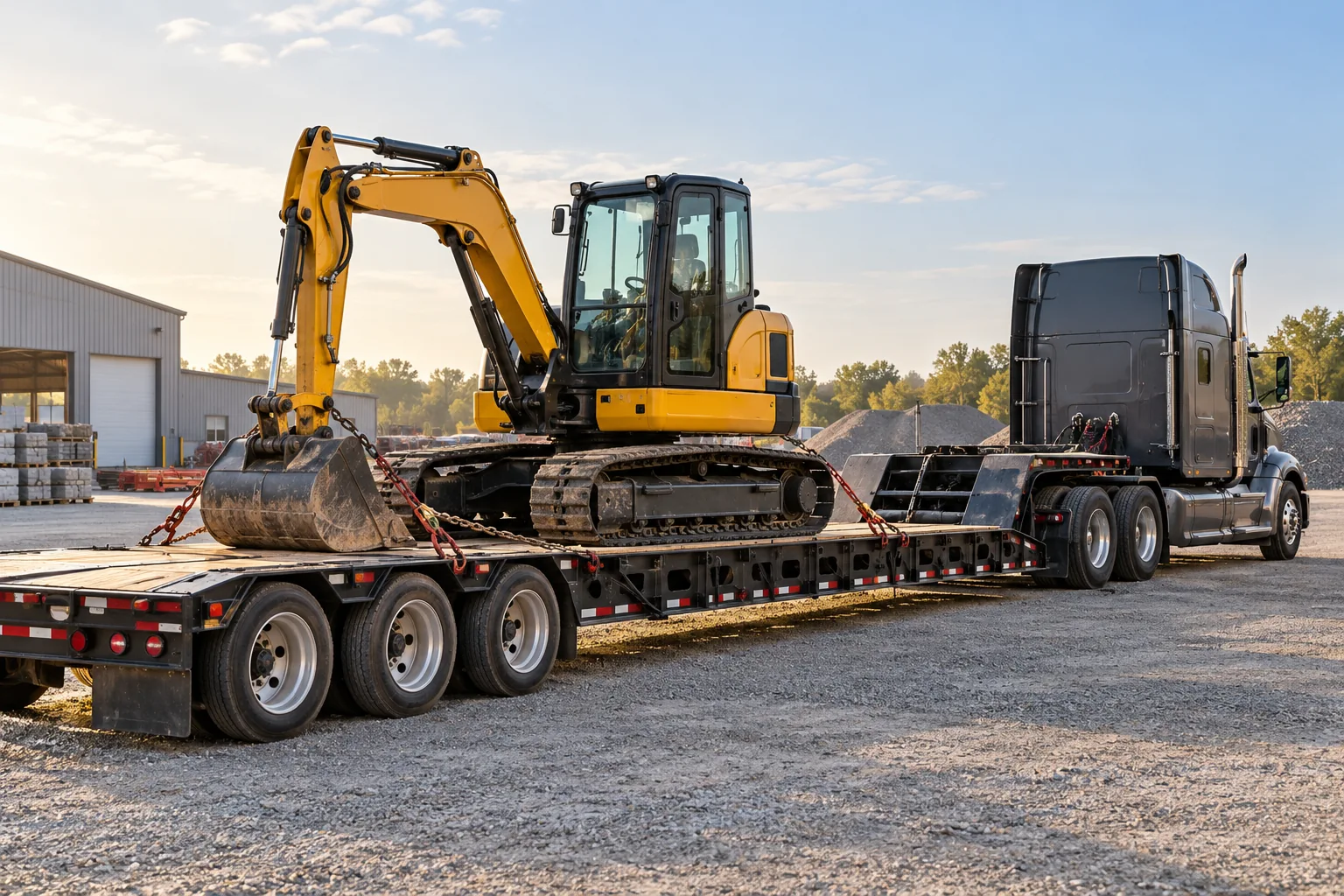
Compact excavator secured on a lowboy equipment trailer in a construction yard

The details that make the difference

The right specifications make a useful transport quote

A model name alone may not capture an equipment transport job. Attachments, buckets, counterweights, fluid loads and modifications can change overall size or weight. Provide manufacturer specifications where available and explain whether the machine starts, rolls, steers or requires separate loading support. The pickup and delivery surfaces, overhead clearance and turning space also affect planning. Oversize or overweight requirements cannot be assumed covered by a standard towing quote; the applicable route and any permit or escort needs must be reviewed. Agree who is responsible for site access and loading support before reserving a move, particularly where several contractors are involved.

When this service makes sense.

Construction machinery move

Provide the machine model, operating condition, dimensions and attachments. Excavator, loader and compact-equipment enquiries each need their own transport assessment.

Rental pickup or return

Share the rental branch, reservation details, release contact and receiving deadline. Confirm that the branch can prepare and accept the specific equipment.

Disabled machinery transfer

Explain whether the machine can move and whether loading assistance is available. Non-running equipment can require additional resources beyond transportation.

Industrial site delivery

Disclose access controls, overhead restrictions and delivery windows. A suitable unloading area and responsible receiving contact are essential planning details.

What to share when you call.

  • Transport quotes should include the machine and every attachment travelling with it.
  • Loading, unloading and non-running equipment may require separately confirmed support.
  • Oversize, overweight, permit and escort requirements depend on the actual load and route.
  • Float, lowboy or other specialist transport equipment is subject to availability and suitability confirmation.
A service request is assessed for the vehicle, conditions and available equipment. Specialist lifting, load handling, unusual dimensions or complex recovery may need additional planning. Call to confirm the scope for your job.

A direct route to the next step

Need equipment transport?

Call 289-670-3373 to talk through the job, or share your vehicle and pickup details here. For roadside assistance, the phone line is available 24/7.

Compact excavator secured on a lowboy equipment trailer in a construction yard
Vehicle type, condition and access help determine the towing plan.

Urgent help starts with a call. A saved online enquiry does not dispatch a truck.

Get a free no obligation quote.

Online enquiries continue by email after saving. For immediate assistance, call 289-670-3373.

After saving, open the prepared email and press Send. We use these details to respond to your request. Privacy information.

The vehicle changes. The details matter.

Towing services for your situation.

Explore the service that matches the vehicle and the problem. Each guide explains what to share, what affects the plan and what to ask before authorizing work.

Compact excavator secured on a lowboy equipment trailer in a construction yard
Equipment and machinery moves ↗Confirm dimensions, loaded weight and receiving-site access for a planned move.
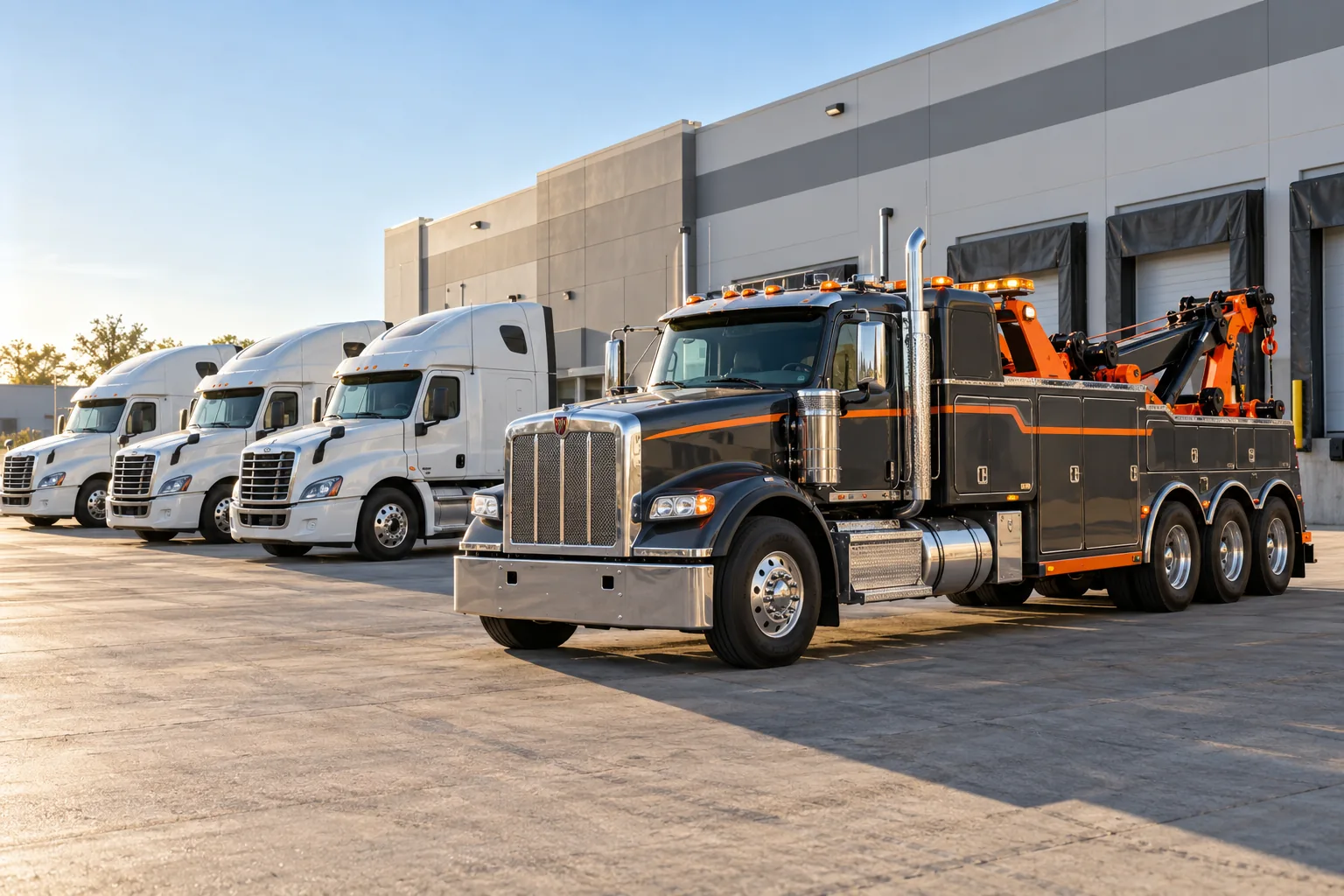
Heavy tow truck and three freight tractors parked at a commercial loading yard
Fleet and commercial transport ↗Coordinate the driver, the authorizing contact and the receiving facility.
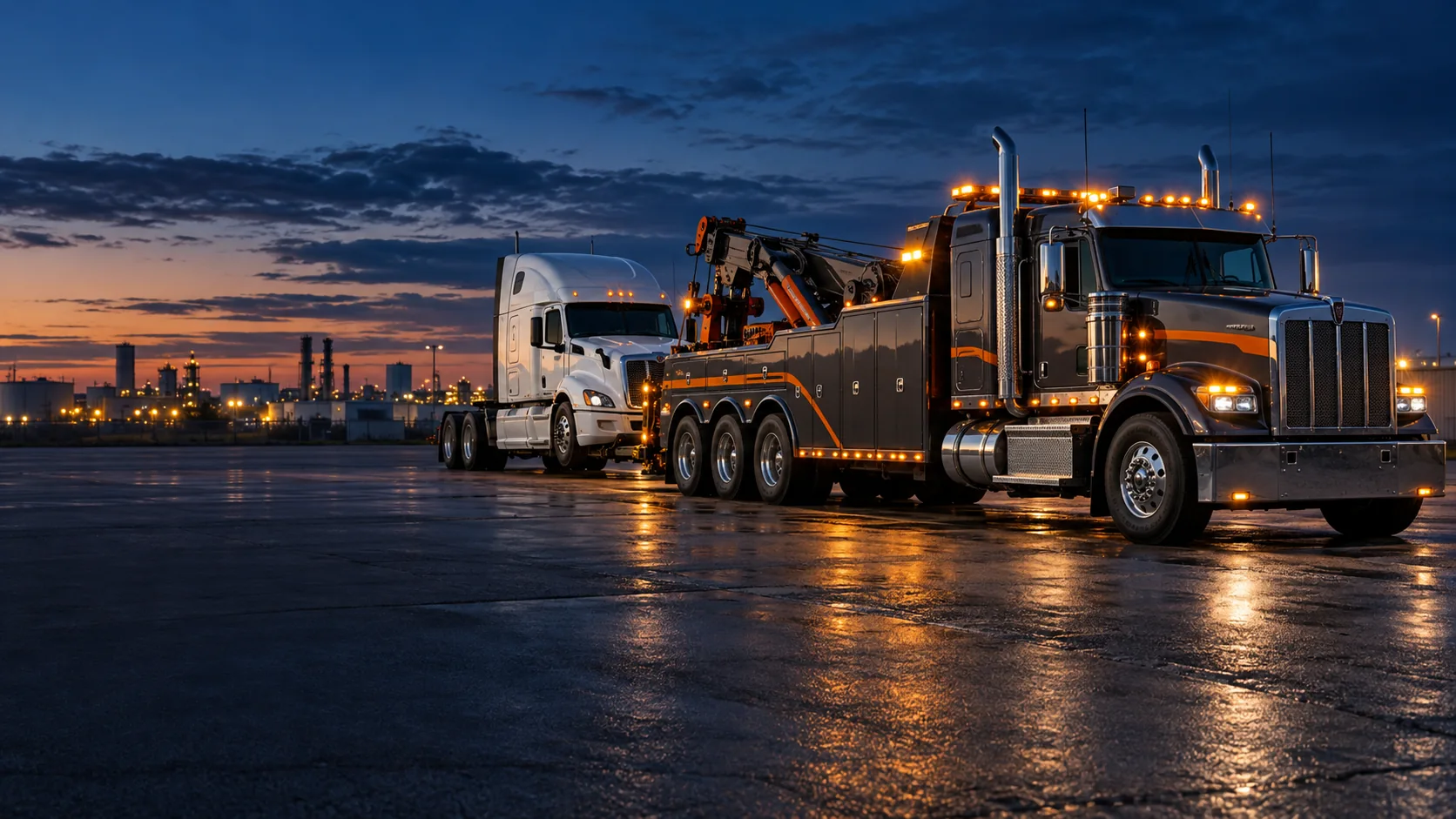
Heavy-duty wrecker and white semi tractor parked in an industrial yard at dusk
Heavy truck towing ↗Weight, configuration and vehicle condition shape the heavy towing plan.

Understand the service

A practical plan for machinery collection and delivery

Equipment transport involves the machine, its attachments and two working sites. A complete request lets the parties distinguish a straightforward yard transfer from a move requiring additional handling, route review or receiving-site preparation.

Separate machine specifications from the complete transport load

Machine operating weight, transport dimensions and the complete load list answer different questions. Weight helps assess carrying capacity; width, height and length affect fit and route clearance; attachments add items that still need space and securement even when removed from the machine. A rental document naming only the base model may omit those differences. Identify confirmed figures separately from estimates so a quote is not built around the wrong configuration.

Transport height and width depend on the agreed travelling configuration and the equipment carrying it. A machine's working dimensions may describe an extended boom or raised attachment rather than its transport position. Supply the manufacturer's information already available and explain the configuration at pickup. Any preparation of unfamiliar machinery should be assigned to competent, authorized personnel, with responsibility agreed before collection.

Identify where collection ends and machinery handling begins

A running machine and a loadable machine are not necessarily the same thing. The engine may start while a travel, steering or hydraulic fault prevents the movement needed for collection. Conversely, a non-running unit may require separate handling resources even though its overall size is unchanged. Those distinctions explain why transportation, machinery operation and recovery are different work items, with different personnel and equipment responsibilities.

At rental branches and shared worksites, the booking contact may not control the gate or machinery. Confirm the branch reservation, site supervisor and person authorized to hand over keys or controls. If collection depends on another contractor, agree the sequence and contact details. Waiting for access, preparing attachments and physically loading the machine are separate activities that should be identified in the proposed work.

Review the road journey and the last metres into the site

Ontario issues oversize or overweight permits when applicable legal limits are exceeded. Whether a particular move needs one depends on the actual vehicle-and-load combination, not simply whether the machine is called compact or heavy. Ask who reviews the dimensions, route and permit requirements, and whether related arrangements are included. Provincial requirements and access on municipal or private roads both need consideration for the proposed journey.

The destination address may lead to a public entrance rather than the equipment entrance. Give the receiving contact, gate location and delivery instructions for the actual unloading area. Describe known surface limits, gradients, overhead obstructions and other contractors using the space. If the site cannot receive the load as planned, an alternative holding location or another visit may affect scheduling and cost and needs specific agreement.

Make the delivery record useful to the next operator

An itemized handover helps distinguish the machine from attachments and accessories moving with it. Record identifying details from documents already held by the owner, along with known pre-existing defects and the agreed delivery location. Photos taken safely by authorized site personnel can support that record. Ask how receipt will be acknowledged when a rental company, foreman or equipment manager will accept the delivery on someone else's behalf.

For comparable quotes, keep the load list and handling assumptions consistent. A price for transportation alone may not cover additional machinery handling, difficult access, waiting or separately supplied support equipment. Identify the person who can authorize changes if the machine or site differs from the description. The useful result is a defined movement with responsibilities at both ends, rather than a vehicle reservation based only on mileage.

A clearer budget

Understand the cost of this service.

An equipment-transport example from the regional guide. Machine dimensions, loaded weight, loading condition, permits, route and site access affect the confirmed scope.

Full towing prices & cost guide ↗

Heavy equipment transport

$200–$400/hour

Regional advertised budget guide · flatbed or float transport

Published provider-guide reference in CAD; not our rate schedule or a confirmed quote. Minimum time, travel, mileage, added resources and taxes need confirmation.

Published market source ↗

A clear process

Plan the job.
Confirm the next step.

01 /

Supply the machine specifications

Send make, model, weight, transport dimensions, attachments and the operating condition.

02 /

Review the full logistics

Confirm loading support, surface conditions, access at both ends and route requirements with equipment availability.

03 /

Agree pickup and handover

Identify the release and receiving contacts, approved scope, timing and pricing before scheduling the transport.

Let’s talk about your equipment transport.

Share your location, vehicle type and what happened. We’ll talk through the next step.

289-670-3373 ↗

A little clarity goes a long way

Equipment transport questions.

Practical answers for the vehicle, equipment and situation.

Ask us about your job ↗
What equipment can be considered for transport?

Provide details of construction, rental or industrial machinery for assessment. Acceptance depends on the actual weight, dimensions, condition, access and suitable transport resources; no universal machine size is implied.

Do attachments need their own dimensions?

Yes. Buckets, forks and other attachments can change the total load and required space. Explain whether they are attached or separate and provide their approximate size and weight when known.

Can a machine that does not start be moved?

Possibly, but the loading and unloading requirements need separate assessment. State whether it can roll or steer and whether qualified site personnel or suitable loading equipment are available.

Are permits included in an equipment-hauling quote?

Do not assume they are. Ask whether the proposed dimensions and route require permits, escorts or other arrangements, who is responsible for obtaining them and whether any related costs are included.

Can you transport equipment from Hamilton to Niagara?

That route can be included in an enquiry. The machine specifications, pickup and receiving access, transport resources and scheduling must be confirmed before a move is accepted.

Where can I find machinery details for a transport quote?

Use the manual, rental paperwork or specifications already held by the owner. Provide the model and known transport dimensions and weight, including attachments. Do not climb on unstable machinery or enter restricted areas to find a plate; flag missing information for follow-up.

Who is responsible for loading machinery at a rental yard or worksite?

Agree who performs loading and unloading before booking, including any role for site personnel or the rental company. Confirm suitable resources at both ends. The scope should specify the included handling rather than assume the transport driver can operate unfamiliar machinery.

Can several small machines and attachments travel as one load?

Submit an itemized list with dimensions, weights and handling requirements for every item. Combined transport depends on suitable space, equipment and loading arrangements. The dimensions of the largest machine do not describe the complete load, and a single trip must be specifically confirmed.

What should the receiving site prepare for machinery delivery?

Confirm a receiving contact, arrival window, equipment access and unloading area. Disclose soft ground, gate restrictions and any need for site handling resources. Agree the unloading plan before dispatch so the machine does not arrive without a practical way to receive it.

Keep exploring

More help for your next move.

Hamilton and the surrounding region

Find help in your area.

Let’s get the details right

Big job or small.
Start with a clear quote.

Tell us what needs moving, where it is, and where it needs to go. We’ll discuss the suitable towing method, access, availability and cost before you commit.

289-670-3373hamiltonheavytowing@gmail.com
  • Heavy trucks, commercial fleets & everyday vehicles
  • Hamilton, surrounding communities & Niagara Falls
  • Long-distance transport enquiries welcome

Need urgent help? Call. Online enquiries are not a confirmed booking or dispatch. For an immediate threat to life or a dangerous traffic situation, call 911.

Tell us what you need.

Online enquiries continue by email after saving. For immediate assistance, call 289-670-3373.

After saving, open the prepared email and press Send to deliver your enquiry. For immediate assistance, call. Your details are used to respond to this request. Privacy information.

24/7 roadside assistanceCall 289-670-3373No obligationGet a free quote ↗