24/7 roadside assistance • Hamilton • Burlington • NiagaraNeed a tow? Let’s talk about the job ↗
HAMILTONHEAVY TOWING
MENU ☰

COMPLEX COMMERCIAL VEHICLE INCIDENTS

Heavy vehicle recovery in Hamilton

A rollover, jackknife or heavily loaded vehicle off the roadway requires a recovery assessment before it becomes a towing job. Vehicle stability, traffic exposure, cargo, ground conditions and damage can all change the response. Hamilton Heavy Towing accepts heavy recovery enquiries across Hamilton and the Niagara corridor, with any job subject to the necessary equipment, personnel and scene coordination being confirmed. Report known hazards and the location from a safe position. Do not approach unstable equipment, spilled materials or recovery lines. Where people face immediate danger, contact emergency services before treating the situation as a routine service enquiry.

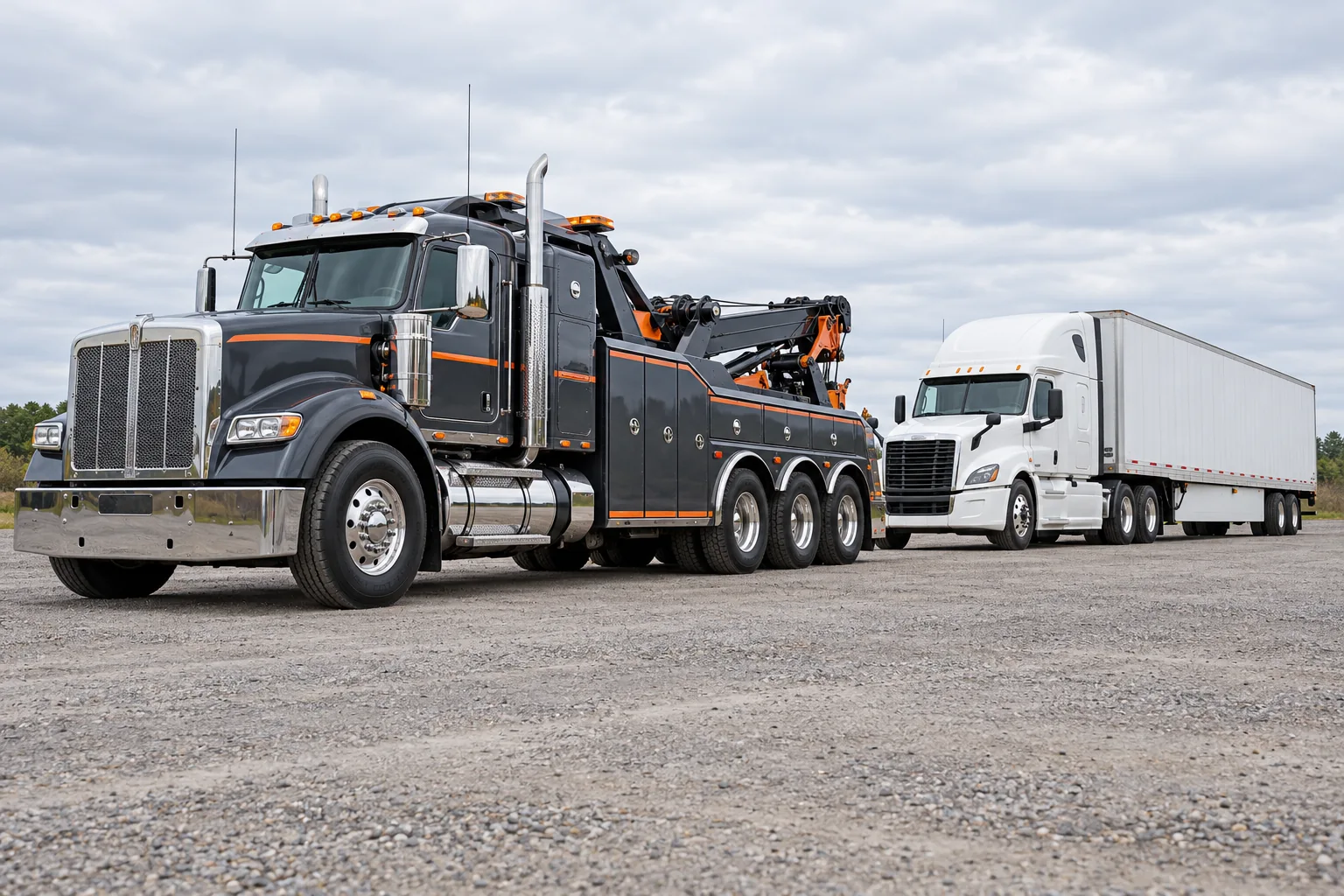
Heavy wrecker and upright tractor trailer at a private recovery staging yard

The details that make the difference

Recovery scope is different from the onward tow

Heavy recovery may involve returning a vehicle to a position where transport can even be considered. It can require scene control, specialized recovery equipment and coordination with the carrier, property owner or authorities. A rotator, additional lifting equipment, cargo transfer or load correction may be appropriate in some incidents, but none should be assumed available or included without specific confirmation. The assessment needs vehicle and load information, incident position, access conditions and known environmental concerns. Once the situation is evaluated, recovery and onward transport should be described as distinct activities with clear authorization, rather than reduced to a single mileage price.

When this service makes sense.

Truck rollover enquiry

Identify the vehicle type, load and known location. Report injuries or immediate hazards to emergency services; a recovery request does not replace emergency response.

Jackknifed combination

Describe the tractor and trailer position without entering the scene. Recovery planning must account for the combination, cargo and surrounding road conditions.

Heavy vehicle in soft ground

Provide the property location and known ground conditions. A vehicle’s accessibility and stability must be assessed before recovery equipment or a method is chosen.

Cargo or load complication

Mention shifted cargo, damaged trailers, leaks or regulated materials at the first contact. Specialist support and separate arrangements may be required.

What to share when you call.

  • Rollover, jackknife and heavy off-road enquiries require a scene-specific assessment.
  • Rotator work, lifting, cargo transfer and load correction are only considered with confirmed specialist resources.
  • Spills, dangerous goods, injuries and public-road hazards may require separate emergency or specialist response.
  • Recovery, waiting, additional equipment, storage and onward towing should be discussed as distinct cost items.
A service request is assessed for the vehicle, conditions and available equipment. Specialist lifting, load handling, unusual dimensions or complex recovery may need additional planning. Call to confirm the scope for your job.

A direct route to the next step

Need heavy vehicle recovery?

Call 289-670-3373 to talk through the job, or share your vehicle and pickup details here. For roadside assistance, the phone line is available 24/7.

Heavy wrecker and upright tractor trailer at a private recovery staging yard
Vehicle type, condition and access help determine the towing plan.

Urgent help starts with a call. A saved online enquiry does not dispatch a truck.

Get a free no obligation quote.

Online enquiries continue by email after saving. For immediate assistance, call 289-670-3373.

After saving, open the prepared email and press Send. We use these details to respond to your request. Privacy information.

The vehicle changes. The details matter.

Towing services for your situation.

Explore the service that matches the vehicle and the problem. Each guide explains what to share, what affects the plan and what to ask before authorizing work.

Heavy wrecker and upright tractor trailer at a private recovery staging yard
Commercial recovery ↗Recovery needs start with the vehicle’s position, stability and access.
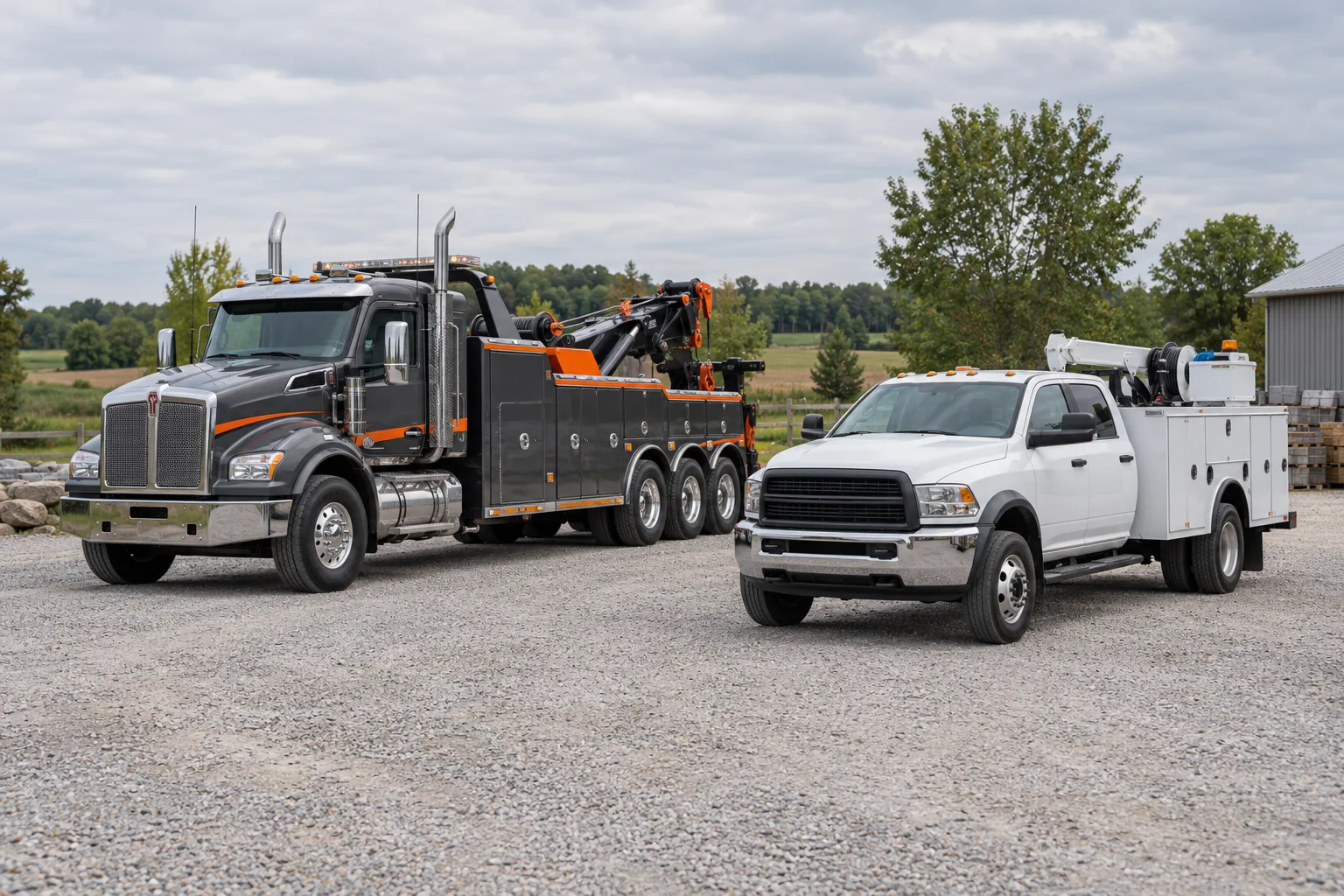
Heavy tow truck and utility truck staged on firm ground in a private rural access yard
Winching and recovery ↗Describe the ground conditions and vehicle position without approaching an unsafe scene.
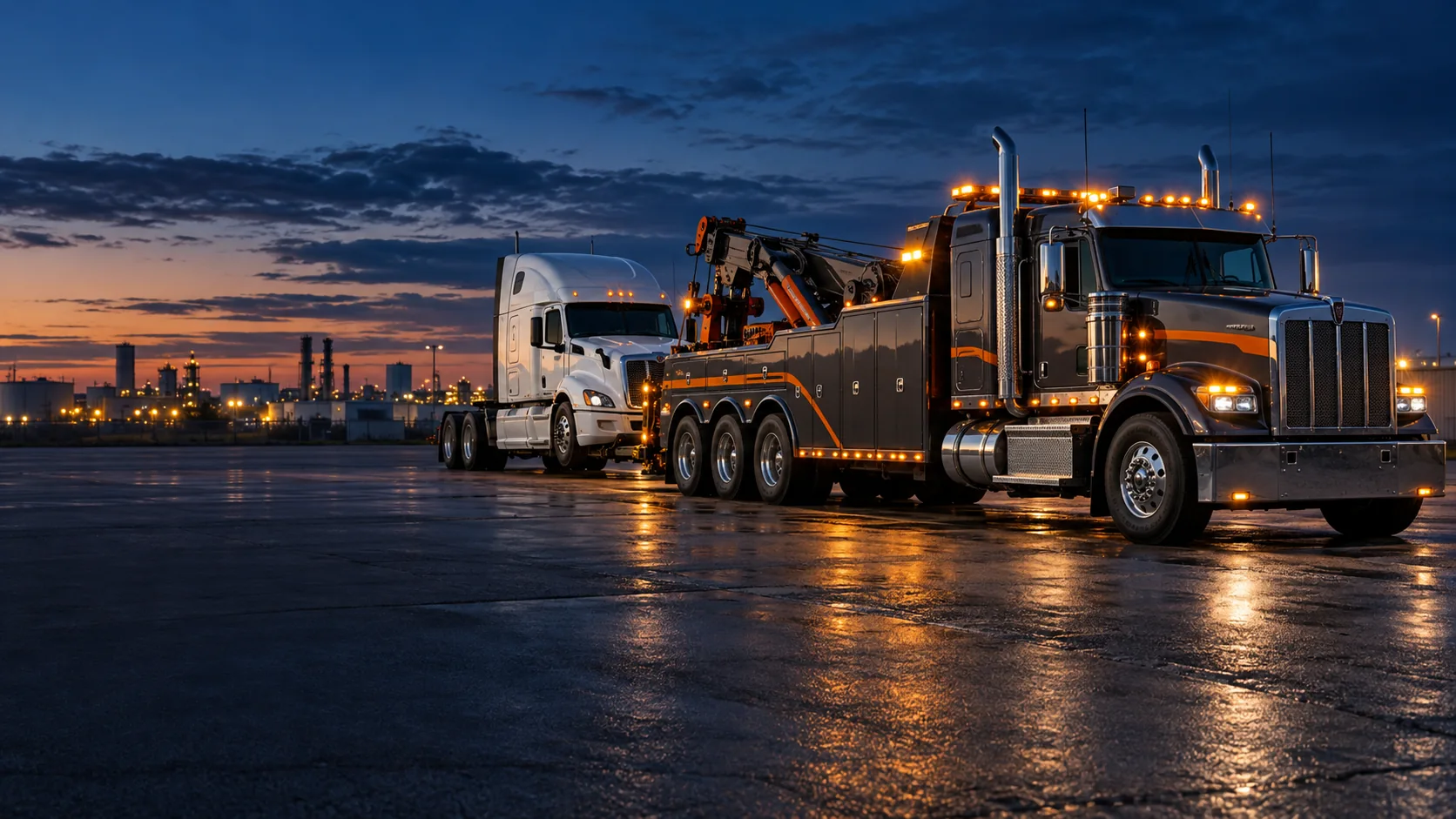
Heavy-duty wrecker and white semi tractor parked in an industrial yard at dusk
Heavy truck towing ↗Weight, configuration and vehicle condition shape the heavy towing plan.

Understand the service

Understand the decisions within a heavy recovery incident

A recovery enquiry is most useful when it explains the incident as it stands, identifies the people responsible and leaves room for a scene assessment. Retrieving a vehicle, handling freight and arranging onward transport can become distinct parts of the same event.

Describe the present scene rather than naming equipment

A recovery changes a vehicle’s position in circumstances where ordinary transport may not yet be possible. Weight alone does not define the problem: orientation, ground support, damage and load condition all affect what needs assessment. A truck resting against an obstruction is a different situation from one upright on firm ground. Requesting a rotator or heavy wrecker names equipment, but does not establish the complete resources or method appropriate to the incident.

Existing photographs can help show relationships between the vehicle, road and surrounding property, but they do not establish hidden damage or ground strength. State where the images were taken and which areas cannot be seen. Share vehicle specifications, load records and the driver’s account through the appointed contact. Do not approach an unstable vehicle, enter beneath a trailer or cross an active work area to improve the information available for a quote.

Expect separate decisions as the scope becomes clearer

Recovery and transport address different stages of an incident. The first concern may be the vehicle’s position and the conditions preventing movement; later decisions concern where and how it can travel. Cargo arrangements or additional specialist resources can sit between those stages. A preliminary equipment request therefore cannot describe every task. The proposed scope should explain the intended stages, what is already known and which decisions depend on a fuller scene assessment.

A change during assessment is not necessarily a change in the desired outcome. It may reveal damage, load conditions or access limitations that were not visible in the first account. This is why recovery needs a reachable authorized decision-maker and an agreed process for approving added resources. Insurer reporting is a related but separate responsibility: opening a claim does not itself establish the insurer’s coverage decision or authorize every task involved in vehicle retrieval.

Include the surrounding property and known environmental concerns

A heavy vehicle can affect a verge, driveway, fence, drainage feature or private access as well as the road itself. Identify property contacts already involved and any access permissions that still need discussion. Tell the assessment contact about known underground or overhead site restrictions without attempting to inspect them. Recovery equipment needs a workable location, and the apparent open space in an image may not tell the whole story.

Disclose reported fuel loss, damaged containers, unknown materials or freight with specialist handling requirements. Follow the instructions of emergency responders and the appointed scene personnel; an owner or driver should not enter a spill area to confirm its contents. The recovery discussion should identify which responsibilities belong with other appropriate parties. Do not assume that a vehicle retrieval estimate automatically includes environmental response, property restoration or cargo disposal.

Decide where the vehicle goes after recovery

Recovering a truck to an accessible position does not establish that it is safe to drive. Damage to running gear, the body or other systems may only become clearer as the incident is assessed. Identify a proposed receiving location that can accept the damaged vehicle, and explain any limitations already known. A normal maintenance appointment may not cover a vehicle that arrives unable to roll or with substantial structural damage.

Ask how recovery, subsequent towing and any additional delivery would appear in the agreed scope. Keep the vehicle identity, incident location, approving contacts and destination consistent across the records. Share existing condition observations and any change communicated during the job with the receiver. An orderly handover gives the owner a clearer next step for inspection or repair without presenting recovery itself as proof of roadworthiness or a guarantee about the vehicle’s eventual condition.

A clearer budget

Understand the cost of this service.

A reference for semi/trailer recovery in the regional guide. Load, ground conditions and the equipment or crew required change the job. Onward towing and additional resources must be scoped separately.

Full towing prices & cost guide ↗

Semi-truck & trailer recovery

$250–$500/hour

Regional advertised budget guide · recovery work

Published provider-guide reference in CAD; not our rate schedule or a confirmed quote. Minimum time, travel, mileage, added resources and taxes need confirmation.

Published market source ↗

A clear process

Plan the job.
Confirm the next step.

01 /

Establish the incident facts

Share the location, vehicle configuration, cargo information and known hazards while staying clear of the recovery scene.

02 /

Confirm resources and responsibilities

Review required personnel, recovery equipment and any authority or property coordination. Specialist equipment is subject to explicit confirmation.

03 /

Authorize recovery and transport scope

Agree what work is being requested, how changes will be approved and where the recovered vehicle can be received afterward.

Let’s talk about your heavy vehicle recovery.

Share your location, vehicle type and what happened. We’ll talk through the next step.

289-670-3373 ↗

A little clarity goes a long way

Heavy vehicle recovery questions.

Practical answers for the vehicle, equipment and situation.

Ask us about your job ↗
What is the difference between heavy recovery and towing?

Recovery addresses a vehicle’s difficult position or condition, such as a rollover or ditch incident. Towing moves a vehicle after a suitable transport plan is established. An incident may require both.

Do you have a rotator available?

A specific recovery truck or lifting system must be confirmed for the job. Provide the incident details so the required resources can be assessed; this page does not guarantee rotator availability or lifting capacity.

Can a shifted load be recovered with the truck?

The load and vehicle need assessment together. Cargo transfer, stabilization or specialist handling may be needed before movement, and those activities require separate resources and authorization.

What should a driver do near a heavy recovery scene?

Follow instructions from emergency responders and the appointed recovery personnel. Stay clear of unstable vehicles, suspended loads, cables and spilled materials. Do not attempt to assist with recovery work yourself.

Why is heavy recovery difficult to quote from a photo?

A photo may not show vehicle weight, ground strength, hidden damage, load condition or safe equipment access. It can support an assessment but cannot replace the full incident information and scene evaluation.

Who should approve extra equipment if the recovery becomes more complex?

Identify an authorized decision-maker who can remain reachable. Ask how changes in resources, time and onward transport will be explained and approved. Confirm any insurer involvement separately; requesting recovery does not establish coverage or authorize every possible additional task.

Will the vehicle be ready to drive after heavy recovery?

Recovery changes the vehicle position; it does not establish mechanical or structural roadworthiness. Inspection, repair or workshop transport may still be needed. Include an onward destination in the discussion so a separate towing stage can be assessed rather than assumed.

What if the truck is partly on private land and partly beside a road?

Describe both parts of the scene and identify any property owner or authority already involved. Access permission and road exposure may affect the plan. Follow the appointed scene contacts and do not attempt to direct traffic or clear an access route yourself.

Do photos need to show underneath an overturned truck?

No photo is worth approaching an unstable vehicle or entering traffic. Share only images already available or obtainable from a safe position. Explain what cannot be seen and provide existing load information without climbing into, beneath or over the vehicle.

Hamilton and the surrounding region

Find help in your area.

Let’s get the details right

Big job or small.
Start with a clear quote.

Tell us what needs moving, where it is, and where it needs to go. We’ll discuss the suitable towing method, access, availability and cost before you commit.

289-670-3373hamiltonheavytowing@gmail.com
  • Heavy trucks, commercial fleets & everyday vehicles
  • Hamilton, surrounding communities & Niagara Falls
  • Long-distance transport enquiries welcome

Need urgent help? Call. Online enquiries are not a confirmed booking or dispatch. For an immediate threat to life or a dangerous traffic situation, call 911.

Tell us what you need.

Online enquiries continue by email after saving. For immediate assistance, call 289-670-3373.

After saving, open the prepared email and press Send to deliver your enquiry. For immediate assistance, call. Your details are used to respond to this request. Privacy information.

24/7 roadside assistanceCall 289-670-3373No obligationGet a free quote ↗