24/7 roadside assistance • Hamilton • Burlington • NiagaraNeed a tow? Let’s talk about the job ↗
HAMILTONHEAVY TOWING
MENU ☰

LOW VEHICLES & RESTRICTED ACCESS

Low-clearance towing enquiries in Hamilton

A lowered vehicle or a car in a parking garage can need more planning than a conventional curbside pickup. Ground clearance, entrance slope, bodywork and ceiling height may each affect how the vehicle can be reached and loaded. Hamilton Heavy Towing provides low-clearance towing in Hamilton and nearby communities, with garage access, vehicle clearance and compatible equipment assessed before collection. Describe whether the challenge is the car’s ride height, the building’s overhead clearance or both. Include modifications, wheel condition and steering restrictions. The retrieval plan and the onward tow should be reviewed together before a booking is accepted.

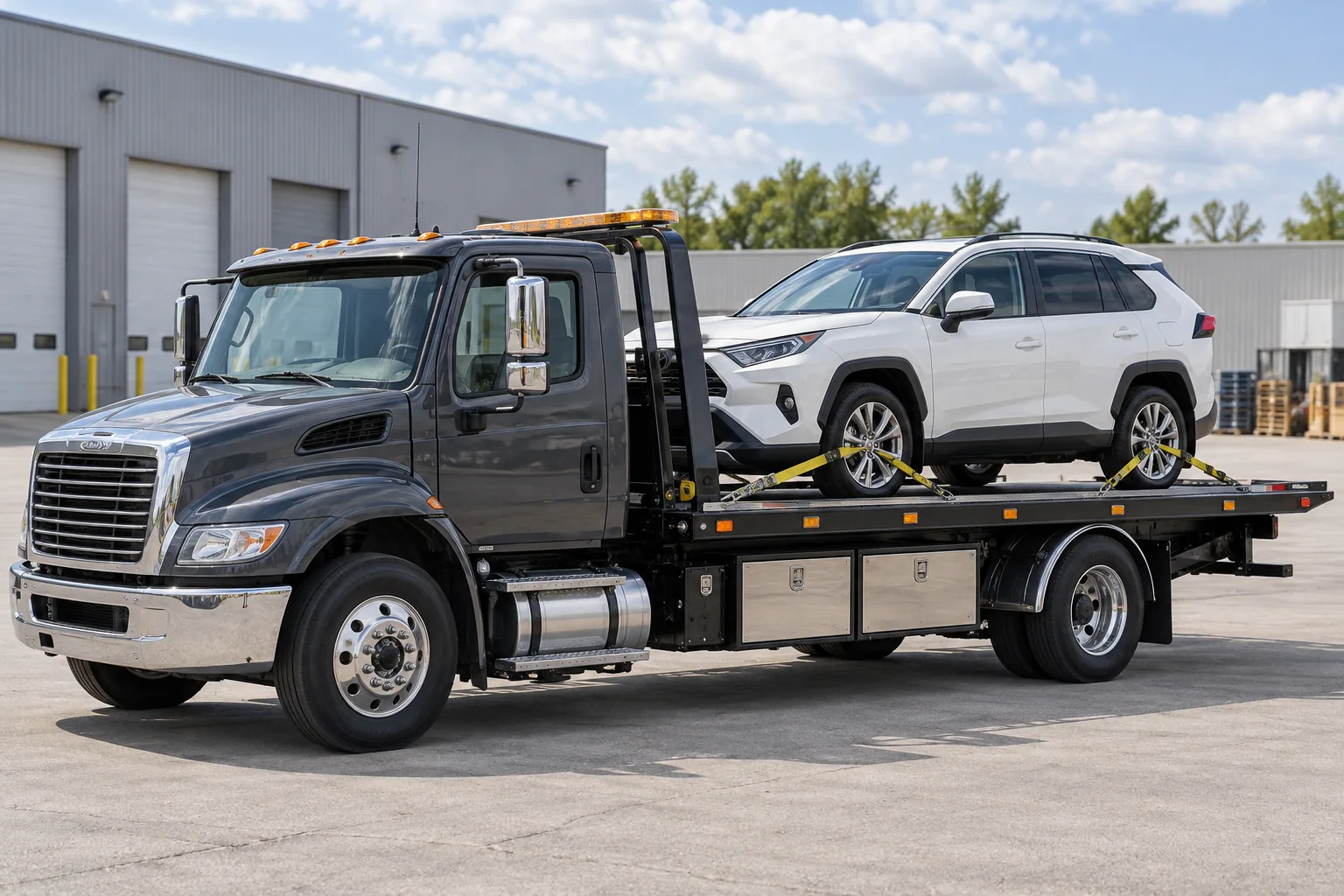
White SUV secured on a flatbed tow truck in a private industrial yard

The details that make the difference

Low vehicle clearance and low building clearance are different

A sports car parked outdoors may need careful loading compatibility, while an ordinary sedan inside an underground garage may be inaccessible to a conventional carrier. Some jobs involve both problems. Provide the posted height limit, entrance layout and vehicle position using information already available; do not enter unsafe traffic areas to collect measurements. Explain aftermarket suspension, splitters, damaged tires or anything that changes the lowest point of the car. Retrieval from restricted parking may require separate resources before transport can begin. Ask what equipment and handling are proposed, whether suitable access is confirmed and which stages are included in the quote.

When this service makes sense.

Lowered or modified car

Describe suspension changes, aftermarket bodywork and known ground clearance. Photographs taken safely can help explain the setup but do not replace an equipment assessment.

Underground parking pickup

Share the posted height restriction, ramp and parking level. A conventional flatbed may not reach the vehicle, so retrieval needs its own review.

Steep driveway or entrance ramp

Explain the access slope, narrow turns and vehicle position. Loading and exit suitability should be considered before equipment is assigned.

Car unable to roll in a garage

Mention locked wheels, missing keys or steering restrictions. Restricted access combined with a non-rolling vehicle can require additional handling resources.

What to share when you call.

  • Low ride height and restricted overhead clearance are separate planning issues.
  • Posted building limits, ramps and turning space can affect equipment access.
  • Specialty retrieval equipment and loading aids require explicit confirmation.
  • Modified bodywork, locked wheels and missing keys should be disclosed before a quote is finalized.
A service request is assessed for the vehicle, conditions and available equipment. Specialist lifting, load handling, unusual dimensions or complex recovery may need additional planning. Call to confirm the scope for your job.

A direct route to the next step

Need low-clearance towing?

Call 289-670-3373 to talk through the job, or share your vehicle and pickup details here. For roadside assistance, the phone line is available 24/7.

White SUV secured on a flatbed tow truck in a private industrial yard
Vehicle type, condition and access help determine the towing plan.

Urgent help starts with a call. A saved online enquiry does not dispatch a truck.

Get a free no obligation quote.

Online enquiries continue by email after saving. For immediate assistance, call 289-670-3373.

After saving, open the prepared email and press Send. We use these details to respond to your request. Privacy information.

The vehicle changes. The details matter.

Towing services for your situation.

Explore the service that matches the vehicle and the problem. Each guide explains what to share, what affects the plan and what to ask before authorizing work.

White SUV secured on a flatbed tow truck in a private industrial yard
Flatbed vehicle transport ↗Loading clearance and drivetrain requirements matter before the vehicle moves.
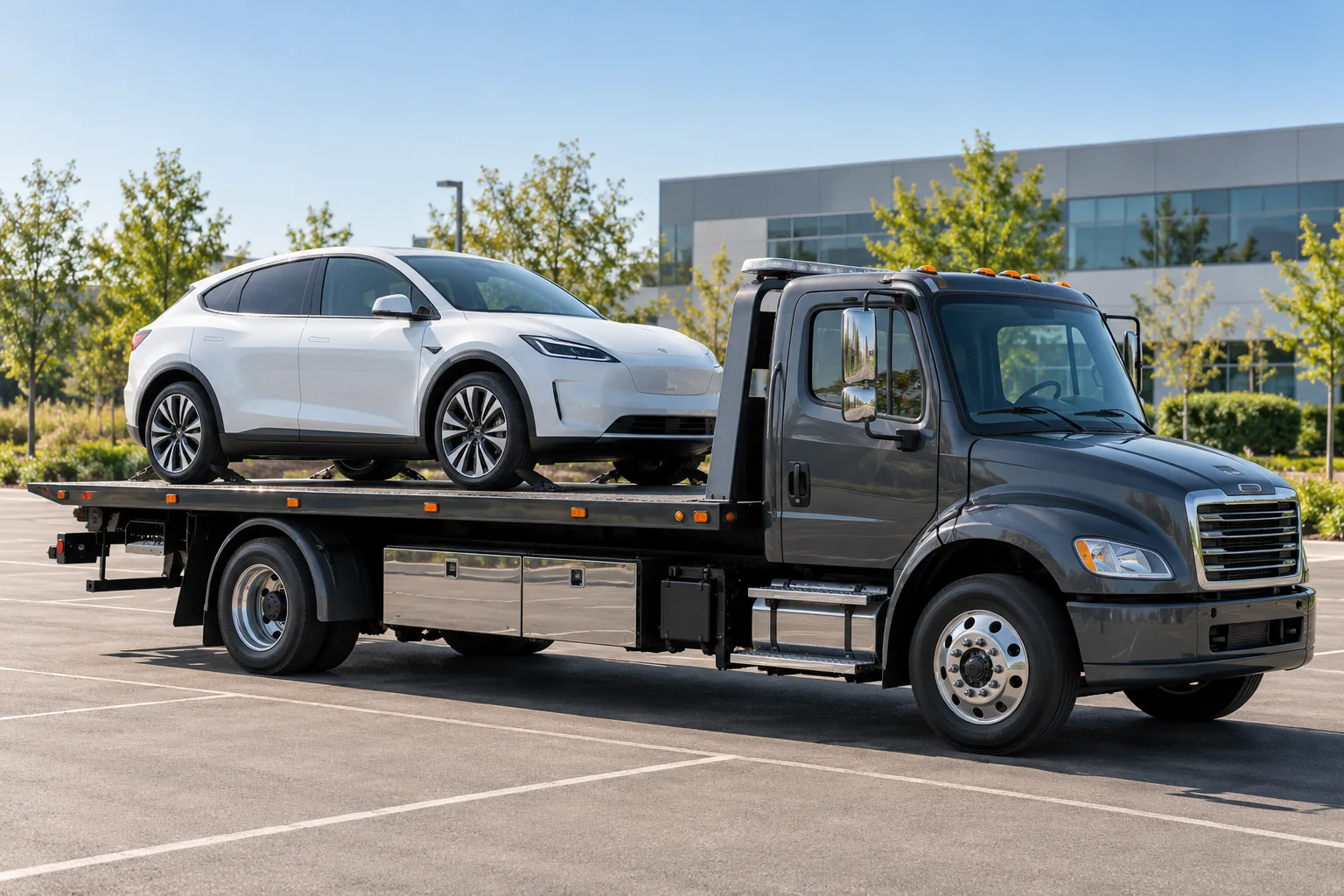
Electric crossover supported on a flatbed tow truck in a modern empty parking lot
Electric vehicle towing ↗Use exact-model towing guidance to discuss a suitable loading and transport method.
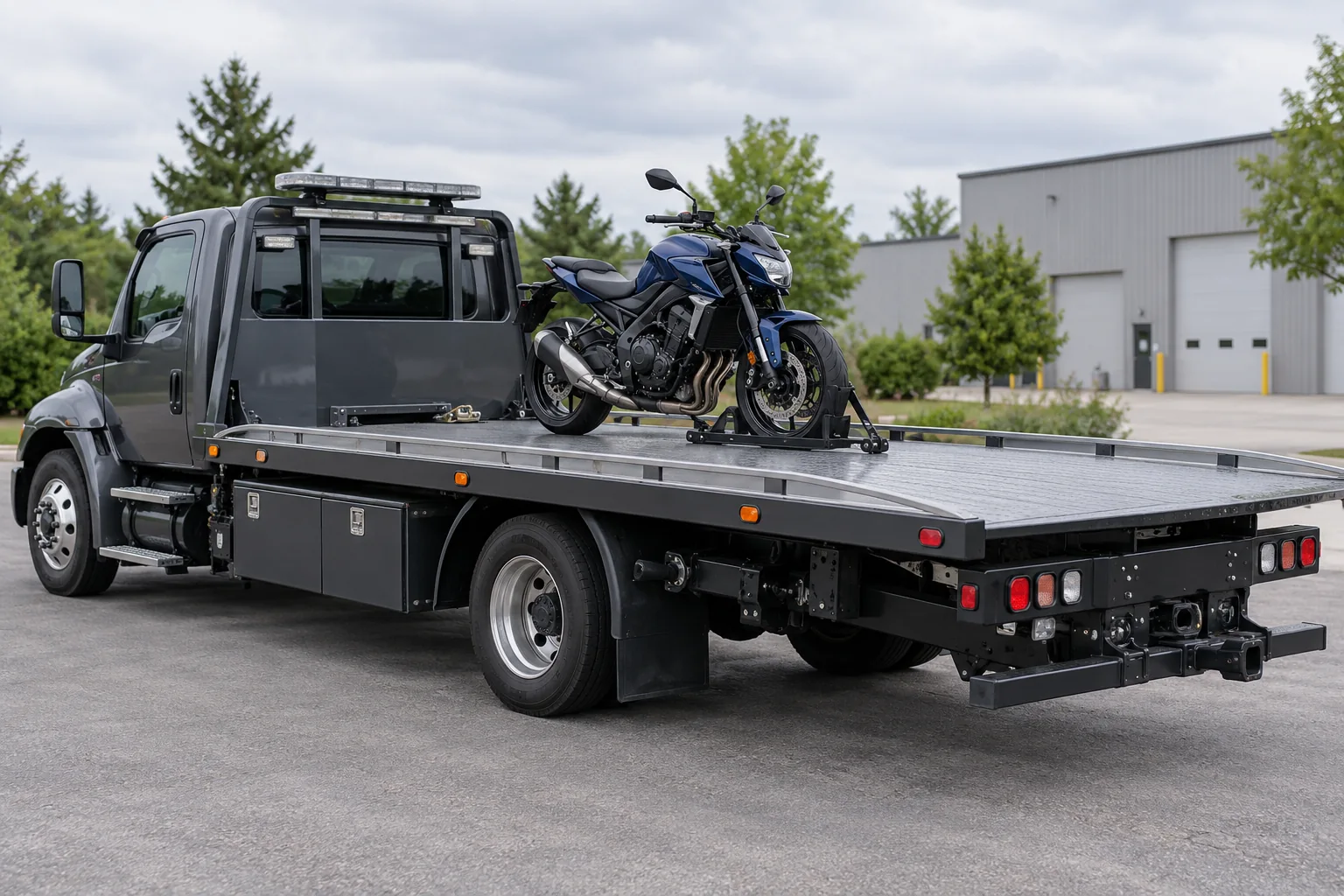
Motorcycle standing upright on a flatbed tow truck in a quiet private paved lot
Motorcycle towing ↗Motorcycle condition and suitable loading arrangements should be discussed in advance.

Understand the service

Plan the full route out of a garage or onto a carrier

Low-clearance retrieval is a route problem as well as a vehicle problem. The lowest doorway, tightest turn, ramp transition and final loading space each matter. A useful assessment follows the proposed movement from the parking bay to the receiving destination.

Clearance changes as a vehicle crosses a ramp transition

A vehicle can clear level pavement yet contact a slope at its front, centre or rear. The front overhang affects the approach to a ramp, the distance between axles affects clearance across a crest, and the rear overhang affects the exit. A splitter, lowered suspension or deflated tire can reduce the available margin. This is why ground clearance alone does not establish loading compatibility.

Overhead access is a separate question involving the proposed equipment throughout the route. An entrance sign may not describe an internal beam, low pipe or changing ramp clearance. Equipment that passes the doorway can still face a tight turn or an unsuitable transition farther inside. A practical assessment considers the car, equipment and complete route together, using building information and safely available observations rather than a single measurement.

Follow the path from the parking bay to open space

Identify the parking level, bay orientation and distance from the exit using information you already have. Mention adjacent vehicles, pillars, sharp corners, gates and one-way internal lanes. The path needs enough usable space for the proposed equipment and movement; reaching the entrance does not establish that the car can be approached or turned. Arrange a building contact who can clarify the layout and grant access.

The exit itself may lead directly to a busy street or a small forecourt with no practical loading area. Discuss where retrieval ends and onward transport begins, including permission to use that space. If equipment has to be staged elsewhere, the plan may need multiple coordinated steps. Those arrangements should be established before assuming a conventional carrier will simply enter the garage and load beside the bay.

Rolling condition and manufacturer requirements still apply indoors

Tell the operator about missing keys, locked steering, an electronic parking brake or a car that cannot shift out of park. Restricted building access does not remove the vehicle's handling requirements. The exact model and drivetrain may affect what can be moved and how. Do not force controls or drag the car to create access; suitable retrieval resources need to be confirmed for its actual condition.

Electric vehicles add model-specific loading instructions to the access assessment. For example, Tesla's Model 3 transporter guidance distinguishes a short repositioning or loading setting from approved road transportation. Share the applicable manual for your own vehicle, without assuming that example applies to every EV. The plan should address garage retrieval, loading onto the transport equipment and the onward journey as connected but distinct stages.

Price the stages and prepare the receiving site

Ask which resources and movements the quotation includes: access attendance, retrieval to open space, loading, onward transport and any waiting for permissions or a keyholder. If the site proves different from the description, discuss the revised plan and charges before further work where possible. A price based only on transport distance may omit the most complicated part of a restricted-access job.

The destination also needs to accept the car at its current ride height and rolling condition. A repair shop with a steep entrance can recreate the original access problem. Confirm its unloading area, opening hours and recipient before collection. Arrange owner authorization and building permission separately, provide the necessary keys through an agreed handover and keep one reachable decision-maker available if the assessed route needs to change.

A clearer budget

Understand the cost of this service.

The ordinary passenger-vehicle range is a reference before collision recovery, garage extraction or specialist loading is assessed. It does not include or price those additional services.

Full towing prices & cost guide ↗

General local vehicle towing

$85–$200

Advertised local towing range

Published provider-guide reference in CAD; not our rate schedule or a confirmed quote. Minimum time, travel, mileage, added resources and taxes need confirmation.

Published market source ↗

A clear process

Plan the job.
Confirm the next step.

01 /

Describe both vehicle and site

Provide the model, modifications, available clearance information and the precise parking position.

02 /

Assess retrieval and loading

Review access limits, vehicle condition and compatible equipment. Do not assume a single truck can complete every stage.

03 /

Confirm the full movement

Agree retrieval, loading, transport and destination details, with availability and any extra handling costs clearly reviewed.

Let’s talk about your low-clearance towing.

Share your location, vehicle type and what happened. We’ll talk through the next step.

289-670-3373 ↗

A little clarity goes a long way

Low-clearance towing questions.

Practical answers for the vehicle, equipment and situation.

Ask us about your job ↗
Can a lowered car be towed on a flatbed?

A suitable flatbed arrangement may be possible, but loading clearance, bodywork and vehicle condition require assessment. Share the modifications and known clearance before equipment is selected.

Can a tow truck enter underground parking?

It depends on the building limits, ramp, turning space and proposed equipment. A conventional carrier may not fit, and a separate retrieval arrangement may be required.

What is the difference between low-clearance and underground towing?

Low-clearance can refer to the vehicle’s distance from the ground, while underground access concerns the space available for equipment. A job can involve either issue or both, and each needs assessment.

What if the car is stuck in park inside a garage?

Tell the booking contact about the drivetrain, keys and rolling restrictions. Manufacturer requirements and suitable retrieval resources must be reviewed before movement; do not try to force the vehicle free.

Are retrieval and transport included in one price?

Ask which stages the quote covers. Moving a vehicle out of restricted parking, loading it and transporting it can involve separate equipment or handling charges, depending on the accepted plan.

Should I measure garage access or rely on the posted height?

Share the posted limit and measurements or building information already available, then explain ramps and internal changes in height. Do not enter traffic or restricted space to measure. Access must be assessed across the route, rather than only at the entrance sign.

Can a lowered car be collected if its suspension will not raise?

Report the model, modifications, current clearance and known suspension fault. Do not operate damaged parts to make loading easier. The vehicle needs assessment in its present condition, including bodywork and available access, before suitable equipment can be confirmed.

What if the garage ramp is steep or has a sharp crest?

Describe the slope and transitions at both ends, plus car clearance and the garage layout. Safely available photos or building information can help. Retrieval requires a site-specific assessment; fitting through the doorway alone does not settle the complete route.

Can building staff release a vehicle while the owner is away?

Arrange owner authorization, vehicle identification, keys and building access approval. Supply the staff contact and confirm who can approve changes to the plan. Permission to enter the property and authority to move the car are separate details that both need agreement.

Keep exploring

More help for your next move.

Hamilton and the surrounding region

Find help in your area.

Let’s get the details right

Big job or small.
Start with a clear quote.

Tell us what needs moving, where it is, and where it needs to go. We’ll discuss the suitable towing method, access, availability and cost before you commit.

289-670-3373hamiltonheavytowing@gmail.com
  • Heavy trucks, commercial fleets & everyday vehicles
  • Hamilton, surrounding communities & Niagara Falls
  • Long-distance transport enquiries welcome

Need urgent help? Call. Online enquiries are not a confirmed booking or dispatch. For an immediate threat to life or a dangerous traffic situation, call 911.

Tell us what you need.

Online enquiries continue by email after saving. For immediate assistance, call 289-670-3373.

After saving, open the prepared email and press Send to deliver your enquiry. For immediate assistance, call. Your details are used to respond to this request. Privacy information.

24/7 roadside assistanceCall 289-670-3373No obligationGet a free quote ↗