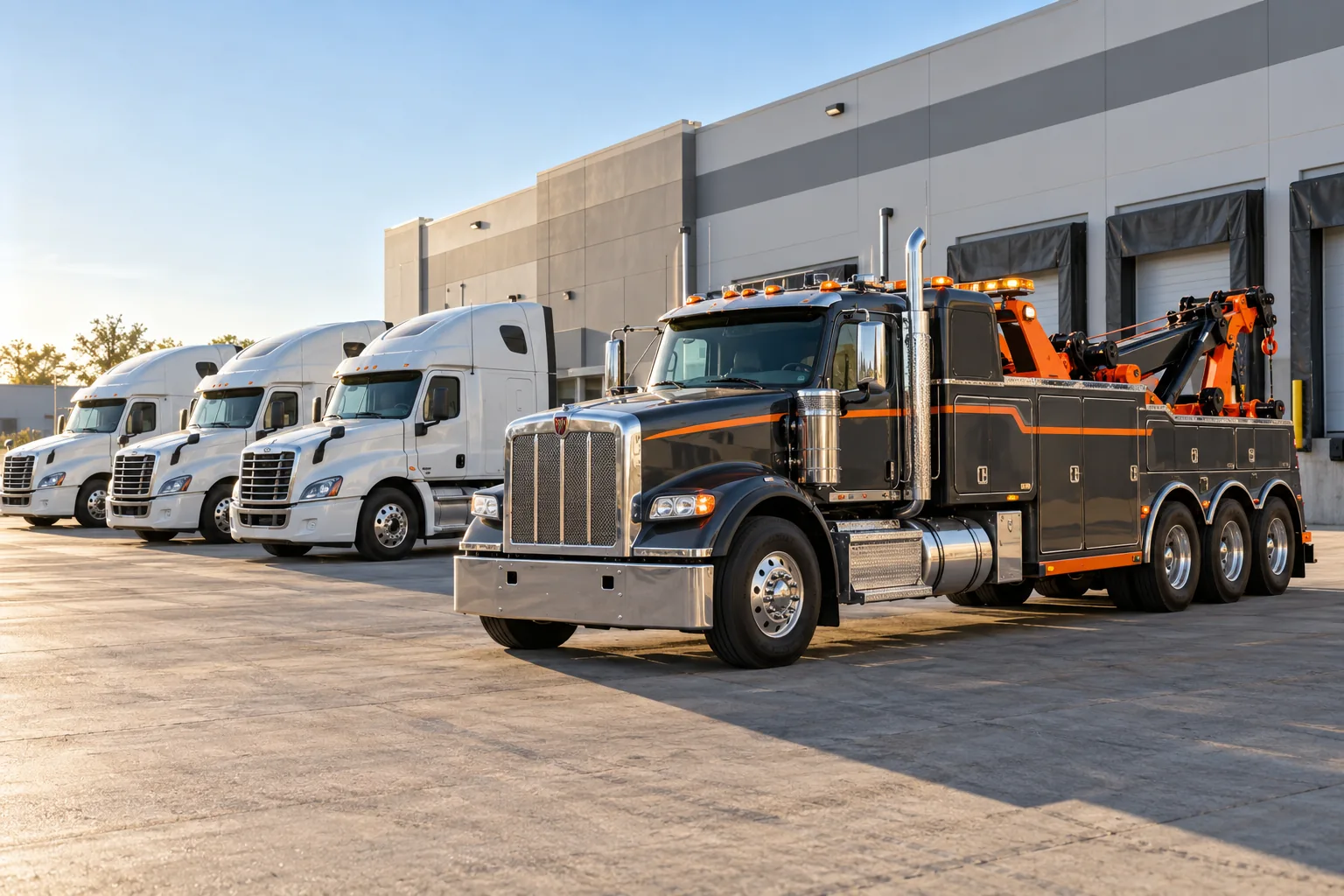
Pin down the location and road position
Give the road name, direction of travel, nearest exit or cross street, and a location pin if one is already available. Say whether the truck is in a travelled lane, on a shoulder, in a yard or on private property. Roadside danger and ordinary scheduling need different responses. In an emergency, contact emergency services rather than waiting for a web enquiry. Do not walk along the highway to find a better landmark. For a yard pickup, add the gate, entrance and site contact. If the pin points to a building rather than the actual truck, explain the difference.
Identify the truck, trailer and load
State whether the job involves a tractor, trailer, combination, straight truck, coach or other heavy vehicle. Provide the make, model, registration or fleet unit number, known gross weight and whether it is loaded. Add trailer type and dimensions when relevant. Mention the number of vehicles involved and any attachments. Relay known faults, warning messages or damage without trying to diagnose the cause. Tell the operator if cargo requires special coordination. Keep dangerous-goods information available for the appropriate responders and follow their instructions; do not describe an unknown substance as harmless.
Explain access and what the vehicle can do
Report whether the vehicle rolls, steers, brakes and has electrical power, as far as you already know. Say if wheels are damaged, the trailer is leaning, ground is soft or the combination is obstructed. A truck beside a loading dock presents different access questions from one in a ditch. Give an honest description rather than attempting a risky test. Ask the operator which photographs would be useful and send them only if they can be taken safely. The initial information helps planning, but final equipment selection can still require assessment by the person responsible for the job.
Prepare the destination and approval chain
Have the proposed delivery address, receiving contact and opening hours ready. A fleet breakdown may also need authorization from a dispatcher, owner, leasing company or roadside program. Identify the person who can approve the scope and receive the quote, and keep one reliable callback number. Tell the operator if a trailer must go somewhere different from the tractor. Ask what has been accepted, what remains to be confirmed and how updates will be communicated. A form submission, an email draft or a price enquiry should not be treated as confirmation that a recovery unit has been dispatched.