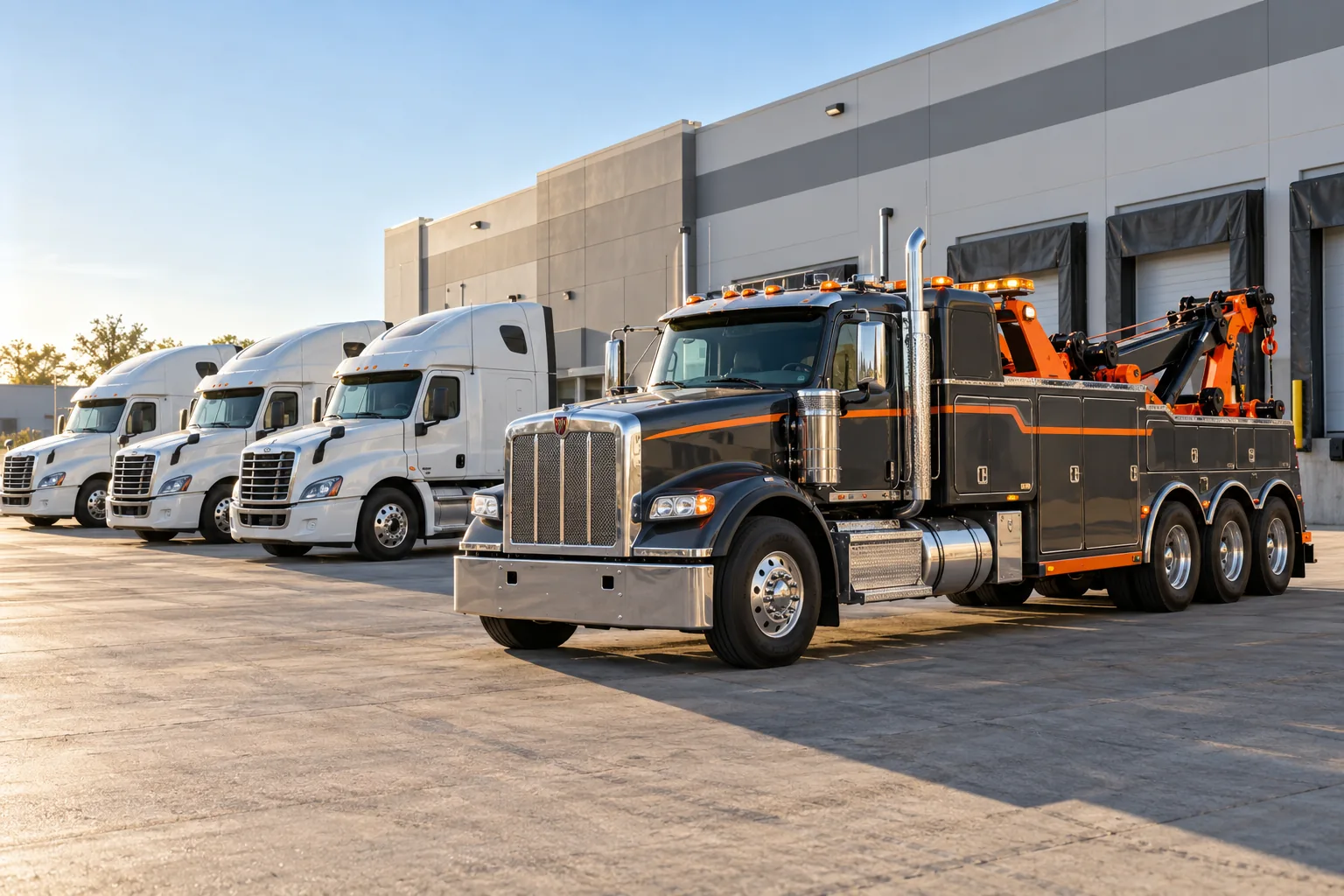
Deal with immediate danger first
Ontario says to call 911 in an emergency or if you are in a travelled lane and cannot move safely. Use hazard lights. Its highway guidance prefers waiting inside the vehicle for responders and advises against attempting repairs or a tire change on the highway. Never stand directly in front of or behind the vehicle. Follow responders' directions.
Check whether you are in a restricted zone
Only authorized providers may tow in a restricted zone. From a safe location in one of those zones, call 511 and select the Tow Zone Program option. Use the Ontario 511 map to verify coverage. Outside a restricted zone, call a towing company directly for a non-emergency tow; 511 is not general towing dispatch.
Heavy vehicles have different instructions
For a vehicle over 4,500 kg GVWR in a restricted zone, Ontario directs drivers to 511 from a safe shoulder location, or 911 in an emergency. The limited exception for an approved roadside membership concerns qualifying light-vehicle breakdowns and does not cover every shoulder, collision or vehicle. Do not assume a preferred commercial provider can attend a restricted zone.
Prepare useful information once you are safe
Keep the road name, direction, nearest exit and a callback number ready. Add the vehicle type and whether a truck is loaded. Use the location information you already have rather than walking into danger to find a marker. For onward transport, gather the proposed receiver's address and contact. Ask what is confirmed before treating any enquiry as a dispatch.