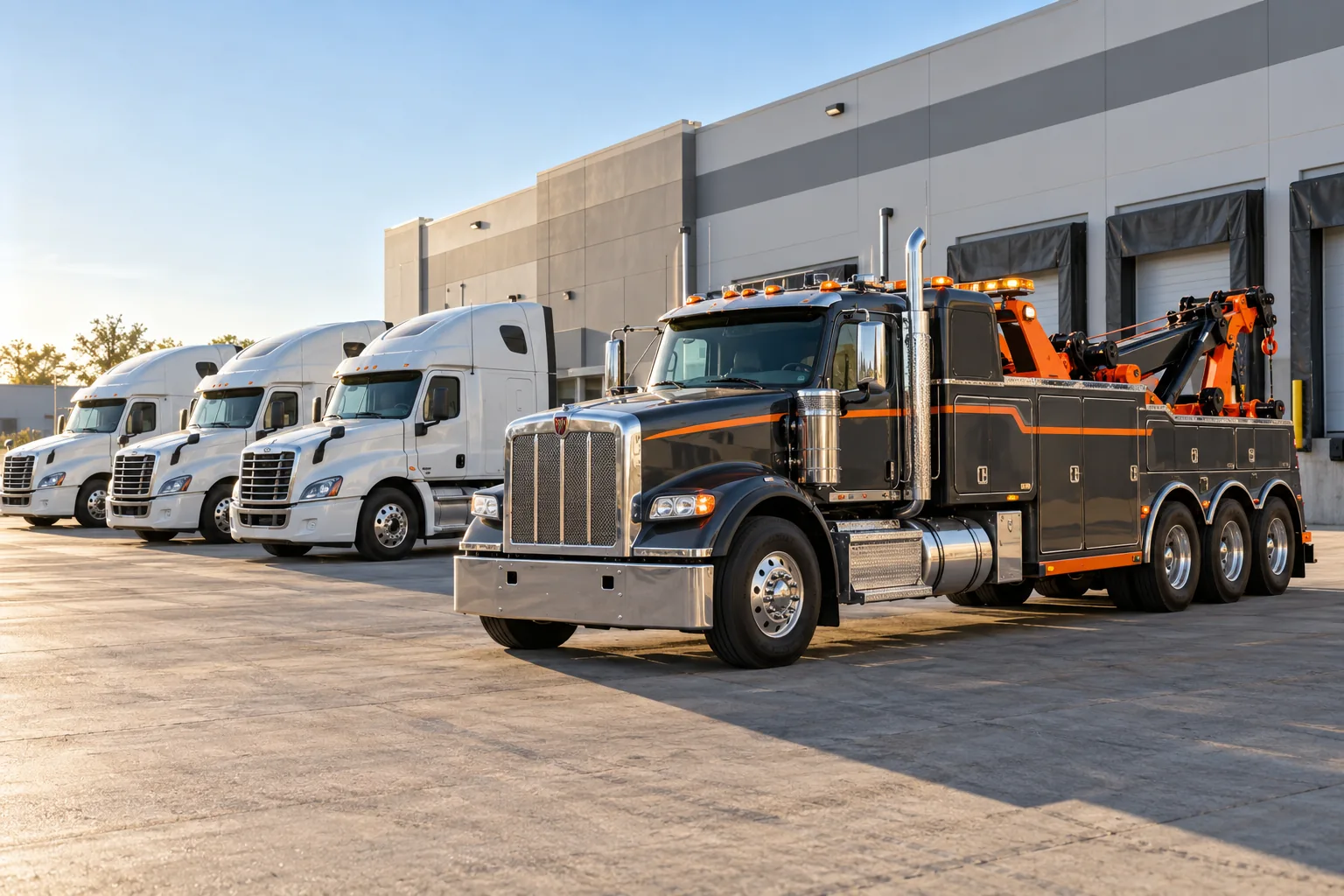
Describe the complete vehicle and load
Start with the truck's make, model and configuration. Tell the operator whether the request concerns a tractor alone, a tractor-trailer combination, a straight truck, a bus, an RV or another commercial vehicle. Include known loaded weight, overall dimensions, axle layout and anything attached to the vehicle. Explain whether the vehicle rolls, steers and brakes, and describe the fault without guessing at the repair. If the load affects access or handling, say so at the first conversation. Clear information helps the operator assess the request and reduces the chance of comparing quotes that cover different work.
Separate a routine tow from a recovery
Explain exactly where the vehicle is and what position it is in. A paved loading area, a tight yard, a soft shoulder and a vehicle off the road present different questions. Say whether wheels are sunk, the truck is leaning, the trailer is loaded or an approach is blocked. Use photographs only when they can be taken from a safe place. Ask whether the quote covers only transport or also the assessed recovery work, extra personnel and any agreed specialist equipment. Recovery planning should follow a site assessment; do not try to reposition a commercial vehicle to make the job look simpler.
Ask how distance and destination are defined
Provide both pickup and delivery addresses, rather than just a town name. Confirm who can receive the truck, the receiving hours and whether the destination has room for the proposed combination. Ask which distance or time basis applies to the quote and what the quoted scope includes. A Hamilton-to-Niagara move can also involve coordination with a repair facility, a fleet manager or a receiving yard. Keep their contact details in the request. If your preferred destination changes, ask for the revised arrangements and price before treating the original quote as an agreement for the new trip.
Compare the scope, paperwork and total
Request the operator's current maximum rate schedule and a written explanation of the proposed work. Ontario requires operators to submit their maximum rates to the Ministry of Transportation; a competitor's price list is not this company's price list. Ask which services are included, how an additional need would be discussed, and whether the figure includes applicable tax. Keep the quote with the final invoice so the descriptions can be compared. An accurate quote reflects the specific work and applicable rate schedule. Send the vehicle details, pickup point and destination for an assessment of your particular request.